
In his press conference on Wednesday, Trump targeted drug-makers and vowed to bring back production in the US.

Nearly 40 per cent of IITians sitting for placements in 2024 are yet to receive job offers, showing a doubling of the 'unplaced' in the last three years from 19 per cent in 2021-2022 to 38 per cent in 2023-2024.

Among the Sensex firms, IndusInd Bank was the biggest loser and fell 6.13 per cent, followed by SBI (3.99 pc), Hindustan Unilever (3.82 pc), Axis Bank (3.41 pc) and HDFC Bank (3.23 pc). In contrast, Sun Pharma, Bharti Airtel, ICICI Bank and PowerGrid defied the trend and closed with gains of up to 3.67 per cent. TCS and Bajaj Finserve were the other gainers.

Unprecedented rains and floods in the northern region in the past few days have not only caused extensive damage to lives and property but have also impacted business and commercial establishments. Vegetable prices have gone through the roof in the national capital and many other parts of the country since rains started pouring earlier this month. Traders say vegetable prices would come down only after roads open and skies clear, even as water in the fields will take time to recede.

In November, DRL registered growth of 28 per cent year-on-year (YoY), which was the highest among peers and double that of the industry growth (14.5 per cent).

Global capability centres (GCCs) are increasingly looking to tap into revenue opportunities from the Indian market, which is already a critical talent hub. While capturing the potential of the Indian market has been in the works over the past few years, it's only of late that companies are gaining momentum. India is home to more than 1,580 GCCs, with a total market size of $46 billion and growing at a compound annual growth rate (CAGR) of 11.4 per cent, according to a Nasscom-Zinnov report.

Among the 30 Sensex companies, Larsen & Toubro, Power Grid, NTPC, State Bank of India, Reliance Industries and HDFC Bank were the biggest laggards. Sun Pharma and Nestle were the only gainers.

Sun Pharmaceutical Industries said it has received approval from US health regulator to market generic Clarinex tablets and Tiazac capsules, used in treating nasal allergies and hypertension, respectively, in the American market.


DUSA is a dermatology company focused on developing and marketing its Levulan photodynamic therapy platform.

The government on Tuesday said it is considering forming a venture capital fund of Rs 2,000 crore (Rs 20 billion) to promote research and development (R&D) in the pharmaceutical sector.

Russia on Tuesday invited Indian pharmaceutical companies to set up joint ventures in the country. Russian Deputy Prime Minister Sergei Sobyanin during his meeting with Commerce and Industry Minister Anand Sharma said Russian pharma firms were keen to increase their engagements with Indian companies including setting up joint ventures.

Sun Pharmaceutical's acquisition of Ranbaxy has received final approvals.

FDI in brownfield investment has resulted in acquisition of domestic drug-manufacturing firms by multinational companies.
Andhra Pradesh is to house the country's first Special Economic Zone (SEZ) for Small and Medium Enterprises (SMEs). The first phase of the project, meant to house about 60 SME pharmaceutical manufacturing units in 200 acres of land is to be ready by mid-2008.

Opportunities will also stem from the clear support for generics.

It hopes to turn around Ranbaxy within four years of closing the deal by improving efficiency and resolving all regulatory issues
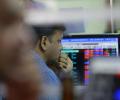
ITC was the biggest loser from the Sensex pack, sliding 2.04 per cent, followed by Power Grid, Reliance Industries, Larsen & Toubro, Nestle, Kotak Mahindra Bank, Bajaj Finance and JSW Steel. On the other hand, Titan, State Bank of India, Bajaj Finserv, Axis Bank, Tata Steel, Sun Pharma, Tech Mahindra and Bharti Airtel were the gainers.

Among the Sensex firms, Bajaj Finance fell by nearly 3 per cent, the most among the 30 frontline companies. Bajaj Finserv, Axis Bank, HDFC Bank, Reliance Industries, NTPC, ICICI Bank and IndusInd Bank were the other major laggards. In contrast, Tata Motors, Sun Pharma, Maruti and Mahindra & Mahindra were the gainers.
These include former drugs controller M Venkateshwarlu, Ranbaxy CMD Malvinder Mohan Singh, Ranjit Shahani, India chief of Swiss pharma major Novartis AG, Ramaprasad Reddy, chairman Aurobindo Pharma and Rajesh Jain, joint managing director, Panacea Biotec.

'The deaths of the children in the Gambia would batter India's reputation as the developing world's pharmacy.'
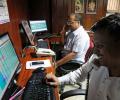
Sun Pharma emerged as the biggest gainer from the Sensex pack, climbing 2.09 per cent, followed by ITC, Titan, Bajaj Finance, Nestle, Infosys, L&T, JSW Steel, Reliance Industries and Kotak Mahindra Bank. UltraTech Cement, Maruti, HDFC Bank, Wipro, State Bank of India and NTPC were among the laggards.

Sun Pharma's managing director Dilip Shanghvi, says we continue to look for opportunities to expand our business in all the key geographies and markets we are focused on.

Corporate India is starting to step up its capital expenditure plans amid government incentives and signs of rising demand, company executives and analysts have indicated. This coincides with the Reserve Bank of India (RBI) recently citing a double-digit growth in private capital expenditure. Healthy balance sheets of banks and corporates, along with increasing capacity utilisation and improving business sentiment, are contributing to a favourable environment for sustained growth in private sector investments, the RBI said in its policy last week.

'Given the inherent volatility, investors should take at least a three to five-year view.'

PharmEasy has acquired Medlife for an undisclosed amount, the e-pharmacy unicorn said on Tuesday. The deal will make PharmEasy the largest player in the domestic online pharmacy sector, with the combined entity set to serve 2 million customers a month.

The FIPB, headed by Department of Economic Affairs Secretary Arvind Mayaram, discussed 30 foreign direct investment proposals, including 10 from pharma sector.

Benchmark equity indices Sensex and Nifty settled with marginal gains on Thursday in a highly volatile trade amid the scheduled monthly derivatives expiry and muted trend in the US markets. The 30-share BSE Sensex closed 86.53 points or 0.13 per cent higher at 66,988.44, registering its third day of gains. During the day, it hit a high of 67,069.89 and a low of 66,610.35.

Operating margins have been the primary driver of corporate earnings in India in recent quarters, despite revenue growth suffering from weak consumer demand. Companies across sectors have reported a sharp improvement in earnings before interest, tax, depreciation, and amortisation (Ebitda) margins over the past two years, benefiting from lower commodity and energy prices. Higher margins more than compensated for slower revenue growth, resulting in double-digit growth in net profit for five consecutive quarters.

Equity fundraising through initial public offerings (IPOs) rose 20 per cent during the financial year 2023-24 (FY24). During the period, 76 Indian corporates raised Rs 61,915 crore through main board IPOs, compared to Rs 52,116 crore mobilised by 37 IPOs in 2022-23, as disclosed by PRIME Database. However, if one excludes the mega Life Insurance Corporation (LIC) IPO, which came out in 2022-23, IPO mobilisation increased by 58 per cent from last year.

In the manufacturing sector, output is expected to decline by about 70 per cent as only food-processing, and drugs and pharma industries are allowed to operate while other segments, such as engineering and metals, have shut operations.
Drug maker Sun Pharmaceutical Industries on Monday said it has commercially launched generic Ethyol, used in the treatment of cancer. Ethyol is the generic version of Medimmune's Ethyol amifostine injection, used for treating cancer, Sun Pharma informed the Bombay Stock Exchange, adding that the drug has an annual sales of $80 million in the US.

rediffGURU Chandu Nair advises entrepreneurs and enterprises about how to create and build their business.

Nearly 150 senior management staff will be asked to leave.

Equity fundraising through initial public offerings (IPOs) rose 20 per cent during the financial year 2023-24 (FY24). During the period, 76 Indian corporates raised Rs 61,915 crore through main board IPOs, compared to Rs 52,116 crore mobilised by 37 IPOs in 2022-23, as disclosed by PRIME Database. However, if one excludes the mega Life Insurance Corporation (LIC) IPO, which came out in 2022-23, IPO mobilisation increased by 58 per cent from last year.
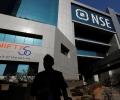
Five firms, including ACC Ltd, HDFC Asset Management Company and FSN E-Commerce Ventures that runs Nykaa, will be dropped from Nifty Next 50 index from September 29. NSE Indices Ltd, an arm of the National Stock Exchange, on Thursday said that Indus Towers and Page Industries will also be dropped from the index. Punjab National Bank, Trent, Sriram Finance, TVS Motor Company, and Zydus Lifesciences will be included in the Nifty Next 50 index, NSE Indices said in a statement.

Telangana chief minister K Chandrasekhar Rao on Wednesday announced the establishment of a massive industrial park dedicated to pharmaceutical manufacturing activities.

Mutual funds (MFs) are betting on a turnaround in the healthcare sector to boost returns but are divided on the prospects of the information technology (IT) sector amid uncertain growth outlook. At the end of June, all of the top 20 fund houses were overweight on the healthcare sector vis--vis the sector's presence in the BSE 200 index, shows a report by Motilal Oswal Financial Services (MOFS). In the case of the IT sector, only six of the 20 fund houses had overweight positions.
 © 2026 Rediff.com - Advertise with us - Disclaimer - Privacy Policy - Sitemap - Feedback - About us - Terms of use - Grievances